
Taupō District Business Sentiment - April 2026
Updated: May 21
Summary
The April 2026 Taupō District Business Sentiment Survey highlights a business community that remains resilient but increasingly cautious as economic conditions continue to tighten. Rising operating costs, fuel prices, softer consumer demand, and broader geopolitical uncertainty are placing increasing pressure on business performance and future expectations.
Business confidence remains above 2024 levels, although confidence has decreased since September 2025 and more businesses are feeling worried about the outlook ahead. Revenue performance over the past six months has remained relatively stable for many businesses, however profitability pressures continue to increase as operating costs and margins tighten.
Business expectations for the next six months have weakened notably across revenue, profitability, workforce growth, and the wider economy. Despite this, many businesses continue to signal intentions to invest, diversify, improve productivity, adopt new technologies such as AI, and explore new market opportunities.
Workforce pressures appear to be easing, although businesses continue to report challenges around skills, work readiness, housing affordability, and attracting talent to the district. Seasonal and casual roles remain particularly difficult to fill.
Fuel and transport costs emerged as the single biggest pressure currently impacting businesses, alongside inflationary pressure, consumer demand, cashflow pressures, and compliance costs. Survey responses also highlighted the importance of both visitor spending and local demand to the district economy, with many businesses identifying tourism growth, destination marketing, local collaboration, workforce development, and supporting locally owned businesses as important priorities for future resilience and growth.
Key Insights
Business confidence remains above 2024 levels, although businesses are becoming increasingly cautious about future economic conditions.
Revenue performance has remained relatively stable for many businesses, however profitability pressures continue to increase.
Business expectations for the next six months weakened across revenue, profitability, workforce growth, and the wider economy.
Views of the Taupō District economy remain stronger than views of the national economy.
Workforce shortages appear to be easing, although challenges around skills, work readiness, and attracting talent remain.
Fuel and transport costs were identified as the single biggest pressure currently impacting businesses.
Tourism growth, destination marketing, collaboration, innovation, AI adoption, and supporting locally owned businesses were recurring themes throughout the survey.
Business Confidence
Businesses remain broadly positive about their current business, although confidence has eased compared with September 2025. Confidence levels remain well above April (43%) and September (42%) 2024 results, suggesting many businesses still see underlying strength in their operations. The percentage of businesses feeling worried has also increased from 13% in September 2025 to 29% in April 2026, reflecting a more cautious outlook across the business community.

What is driving this level of business confidence?
Business feedback highlights a mixed operating environment across the Taupō District. Confidence continues to be supported by strong summer trading, forward bookings, tourism activity, steady local demand, and ongoing growth in the geothermal and energy sectors. At the same time, businesses remain cautious about wider economic conditions. Rising operating costs, fuel prices, inflation, global uncertainty, and reduced discretionary spending continue to impact confidence levels. Several businesses also highlighted the importance of supporting locally owned businesses and improving promotion of Taupō as a destination.
Primary Customer Base
Business responses indicate a relatively balanced customer mix across the district. 39% of businesses reported serving a mix of local customers and visitors, while 30% identified visitors as their primary customer base and 30% identified mostly local customers. This reinforces the importance of both tourism activity and local spending to the Taupō District economy, while also highlighting why changing visitor patterns and consumer confidence continue to influence business sentiment across different sectors.

Business Performance Insights
The following results summarise key changes in business performance compared with the previous six months, covering customer demand, revenue, profitability, growth expectations and business outlook for the next six months across the Taupō District.
Demand for Products and Services

Business demand conditions were more mixed in April 2026 compared with September 2025. The proportion of businesses reporting increased demand rose from 22% to 27%, while businesses experiencing decreased demand also increased to 33%. Fewer businesses reported demand remaining steady, down from 55% to 40%, indicating trading conditions are becoming more varied across the local business community.
Revenue Performance Over the Past 6 Months
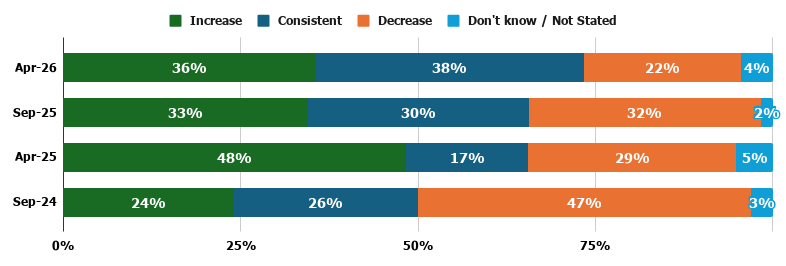
Revenue performance improved in April 2026 compared with September 2025, with less businesses reporting declining revenue and increases in both revenue growth and stable trading conditions. Businesses reporting decreased revenue fell from 32% to 22%, while those reporting consistent revenue increased to 38%. Revenue growth also lifted slightly to 36%, suggesting many businesses have maintained trading activity despite mixed demand conditions.
Profitability Performance Over the Past 6 Months

Profitability conditions remain more challenging than revenue performance across the Taupō District. Businesses reporting declining profitability increased from 35% to 39% between September 2025 and April 2026, while those reporting increased profitability declined to 20%. The proportion of businesses reporting stable profitability increased slightly to 34%, however ongoing cost pressures and tighter operating margins continue to impact overall business performance.
Revenue Expectations for the Next 6 Months

Business expectations for future revenue became more cautious between September 2025 and April 2026. The proportion of businesses expecting revenue growth declined from 48% to 27%, while businesses expecting revenue to decrease increased to 29%. Businesses expecting revenue to remain consistent increased to 42%, indicating many businesses are preparing for more stable or cautious trading conditions over the coming six months.
Profitability Expectations for the Next 6 Months

Businesses became significantly less confident about future profitability in April 2026. Businesses expecting profitability growth declined sharply from 40% to 13%, while those expecting declining profitability increased to 35%. The proportion of businesses expecting profitability to remain consistent increased slightly to 43%, reinforcing a more cautious business outlook and continued concern around operating costs and margins.
Business Growth and Investment Intentions

Despite softer revenue and profitability expectations, many businesses continue to signal intentions to grow or invest over the next six months. Businesses planning to grow slightly or significantly increased from 38% in September 2025 to 44% in April 2026. Businesses uncertain about future growth or investment plans also increased notably to 20%, reflecting continued caution around broader economic conditions and future business performance.
Workforce and Skills
Do You Currently Have the Workforce You Need to Operate Effectively?

Businesses reporting they have the workforce needed to operate effectively increased to 80% in April 2026, up from 71% in September 2025. The proportion of businesses reporting workforce shortages declined to 20%, suggesting workforce pressures may be easing for some businesses compared with previous survey periods.
How Significant Are Workforce Challenges Right Now?
Workforce challenges remain present across the Taupō business community, although for many businesses these are being experienced as relatively manageable. 35% of businesses reported workforce challenges were “not an issue”, while 46% described them as a minor challenge. Only 19% of businesses identified workforce challenges as moderate or significant.
What Are the Main Barriers to Hiring Staff?
Business feedback indicates hiring challenges are being driven more by candidate suitability and labour market conditions than overall labour availability. The most common barriers identified were lack of skills or experience, work readiness and reliability, wage competition, housing affordability, and attracting talent to the district. Several businesses also highlighted uncertainty around future demand and profitability as influencing hiring decisions, while seasonal and project-based work continues to create staffing pressures for some sectors.

Which Roles Are Hardest to Fill?
Seasonal and casual roles were identified as the hardest positions to fill across the Taupō District, followed by professional and specialist roles. Entry-level positions also continue to present challenges for some businesses, highlighting ongoing workforce pressures across both skilled and seasonal labour markets.

How Do You Expect Your Workforce to Change in the Next 6 Months?

Businesses became significantly more cautious about workforce growth in April 2026. The proportion of businesses expecting to increase staff numbers declined from 37% in September 2025 to 9%, while businesses expecting workforce reductions increased to 23%. Most businesses expect workforce numbers to remain stable over the next six months, increasing from 53% to 68%, reflecting a more cautious hiring environment and softer business outlook.
Interest in Working with Schools or Training Providers to Address Future Needs?

Business interest in engaging with local schools and training providers remains mixed. 30% of businesses indicated they would be interested in working collaboratively to address future workforce needs, while a further 26% said they would like more information. The proportion of businesses not interested in engaging increased to 44% in April 2026, suggesting workforce collaboration may not currently be a priority for some businesses amid broader economic uncertainty.
Economic Outlook
Current View of the New Zealand Economy

Business sentiment toward the national economy has weakened significantly since September 2025. 62% of businesses believe the New Zealand economy is slowing, up from 44% in September, while only 4% see the economy in growth. A further 31% of businesses believe the economy is remaining stable. This reflects growing concern around broader economic conditions and a weaker national outlook across the business community.
Expectations for the New Zealand Economy Over the Next 6 Months

Business expectations for the New Zealand economy have also deteriorated sharply. 66% of businesses expect the economy to weaken further over the next six months, up from 30% in September 2025, while only 7% expect economic growth. Businesses expecting stable economic conditions also declined to 18%, indicating a significantly more pessimistic outlook compared with previous survey periods.
Current View of the Taupō District Economy

Views of the Taupō District economy remain stronger than the national picture, although this has eased since September 2025. 49% of businesses believe the local economy is stable, while 31% believe it is slowing and 18% see the district economy in growth. Despite lower softer confidence levels, businesses continue to view the Taupō District economy more positively than the wider New Zealand economy.
Expectations for the Taupō District Economy Over the Next 6 Months

Expectations for the Taupō District economy have also weakened in April 2026. 42% of businesses expect the local economy to slow over the next six months, up from 15% in September 2025, while only 9% expect growth. A further 38% expect local economic conditions to remain stable. Although confidence has softened, businesses continue to show greater confidence in the Taupō District economy than the national outlook over the next six months.
Industry Performance
Industry performance across the Taupō District remains mixed. 44% of businesses reported their industry was performing about the same as six months ago, while 24% reported improved performance. 30% of businesses indicated their industry was performing worse than six months ago, reflecting softer economic conditions and increasing caution across parts of the business community.
Key Pressures and Opportunities
Top Factors Impacting Businesses
Businesses identified fuel and transport costs as the single biggest pressure currently impacting operations, increasing significantly compared with previous survey periods. Consumer demand and market confidence, inflationary pressure, cashflow and working capital, and regulatory burden and compliance costs were also identified as key business challenges. Businesses continue to face a combination of rising operating costs, softer market conditions, and ongoing economic uncertainty.

Top Factors Impacting the Taupō District Economy
Businesses identified cost of living and inflation as the biggest factors currently impacting the Taupō District economy. Tourism demand and visitor activity, housing affordability and availability, workforce availability, and international trade and geopolitical uncertainty were also commonly identified as key influences on the local economy. The responses highlight ongoing concern around affordability pressures and economic conditions, while reinforcing the importance of tourism activity and workforce availability to the district’s future performance.

Biggest Opportunities for Businesses
Businesses highlighted a range of opportunities over the next six months, with common themes including tourism growth, innovation, AI adoption, collaboration, diversification, and expanding into new markets.
Several businesses highlighted opportunities to improve operational efficiency, develop new products and services, strengthen local partnerships, and expand beyond the local Taupō District market. Innovation, AI adoption, and digital capability were also identified as emerging opportunities to improve productivity and adapt to changing market conditions. Tourism activity and stronger destination marketing were identified as important opportunities for growth across parts of the business community.
Priorities for Taupō District Economic Growth
Businesses identified tourism growth and visitor attraction as the highest priority for the Taupō District’s economic growth, followed by supporting existing businesses, attracting new businesses and investment, and infrastructure investment.
Feedback also highlighted the importance of strengthening locally owned businesses, improving workforce capability, supporting innovation and productivity, and ensuring infrastructure keeps pace with future growth. Several businesses emphasised the importance of retaining economic value within the district, increasing collaboration between local businesses and key industries, and building long-term resilience across the wider Taupō business community.
How Businesses Want to Be Supported
Businesses identified marketing, destination promotion, collaboration, and training opportunities as some of the most valuable forms of support currently needed across the district.
Several businesses highlighted the importance of increasing visibility for locally owned businesses, strengthening connections between businesses and key industries, and providing practical support through workshops, networking opportunities, and digital or AI-related training. Businesses also highlighted the value of collaboration between local businesses, stronger destination promotion, and more support for businesses operating outside the Taupō CBD.
Feedback also reinforced the importance of attracting visitors to the region, supporting local spending, and helping small businesses navigate increasingly challenging operating conditions through practical guidance, promotion, and business collaboration.
Support and Resources Needed by Businesses
Businesses identified connections, collaboration opportunities, marketing support, and mentoring as some of the most valuable resources to help them grow or adapt in the current environment.
Businesses also highlighted demand for digital capability support, AI and online marketing training, workforce development support, and greater visibility of local business capability. Several responses reinforced the importance of helping locally owned businesses connect with larger organisations, projects, and economic opportunities within the district, while also improving collaboration across the wider business community.
Access to funding, business guidance, and practical support around marketing, technology, and customer engagement were also identified as important areas to help businesses adapt to changing market conditions and improve long-term resilience.
Business Outlook and Final Comments
Business feedback reflects a mix of caution, resilience, and uncertainty heading into the next six months. Rising fuel costs, inflation, geopolitical uncertainty, and softer market conditions continue to create pressure for many businesses, particularly those reliant on transport, tourism, or discretionary spending.
Several businesses noted they are focused on consolidation, maintaining stability, and carefully managing costs through the quieter winter period. Others remain optimistic about opportunities to diversify, invest in growth, expand services, and adopt new technologies such as AI. Several tourism-related businesses also noted the importance of stronger destination promotion, off-season activity, and encouraging local spending to help support business stability through quieter trading periods.
The importance of local collaboration, supporting locally owned businesses, improving business visibility, and maintaining strong customer relationships were recurring themes throughout the feedback.
Conclusion
The April 2026 Taupō District Business Sentiment Survey highlights a business community that remains resilient but increasingly cautious as economic conditions continue to tighten. Rising fuel costs, inflationary pressure, softer consumer demand, and broader geopolitical uncertainty are contributing to weaker business confidence and more conservative expectations for the next six months.
Despite these pressures, many businesses continue to report stable trading conditions, ongoing investment intentions, and confidence in the longer-term outlook for the Taupō District. Tourism, local collaboration, innovation, workforce development, and supporting locally owned businesses remain key themes throughout the survey and continue to be seen as important drivers of the district’s future economic growth and resilience.
Survey Profile
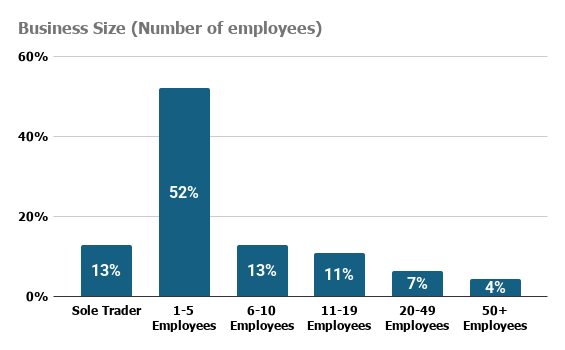
The April 2026 Taupō District Business Sentiment Survey received 46 responses from businesses across the district. The survey captured feedback from a broad mix of business sizes and industries, with small businesses continuing to make up the majority of respondents, reflecting the broader composition of the Taupō District business community.


Comments